Precision spectroscopy and quantum information with trapped molecular ions
Brandon J. Furey, Stefan Walser, Zhenlin Wu, Rene Nardi, Guanqun Mu, and Philipp Schindler
Universität Innsbruck
We aim to demonstrate the creation of superpositions of rotational states in a diatomic molecular ion built using a combination of microwaves and stimulated Raman transitions driven by two beams from an optical frequency comb. This could pave the way for certain quantum error correction codes which use a trapped molecule as the basis for a logical qubit.
Poster Session 4:00 PM–6:00 PM, Monday, March 27, 2023 Alte Kapelle
Group report: Precision spectroscopy and quantum information with trapped molecules
Brandon J. Furey, Stefan Walser, Zhenlin Wu, Guanqun Mu, Rene Nardi, and Philipp Schindler
Universität Innsbruck
The quantum molecules group at the University of Innsbruck utilizes a range of innovative advances in molecular spectroscopy and quantum logic spectroscopy (QLS) to study molecular rovibrational structure and explore quantum information processing with trapped molecules. The efforts of our group are divided into three projects. The first is pump-probe recoil spectroscopy, where we measure the rovibrational population dynamics excited by a pump pulse by mapping them to the electronic state of an atomic ion via QLS. The second project investigates state-dependent force spectroscopy, where an optical tweezer generates a state-dependent force on a trapped molecule. Our third project is demonstrating superpositions of rotational states in a diatomic molecular ion built using stimulated Raman transitions driven by two beams from an optical frequency comb. This could pave the way for using quantum error correction to realize the use of trapped molecules for quantum information or memory. We are interested in creating the rotational superposition states that form the codewords of a truncated Z3 ⊂ Z6 linear rotor code. In order to demonstrate ultrafast light-matter interaction in our system, we have measured the photodissociation spectrum of CaOH+ using an optical parametric amplifier.
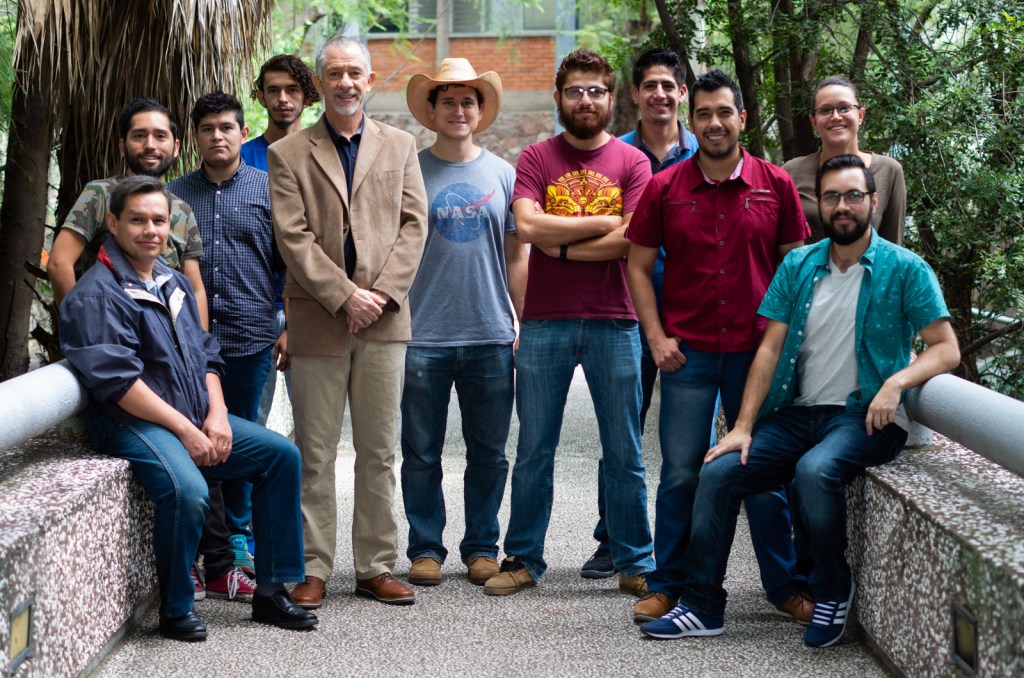
The Innsbruck crowd and friends out for dinner in Hannover.
MO 17.5 3:30 PM–3:45 PM, Thursday, March 9, 2023 Empore Lichthof F102
We present an update and overview of our project’s milestones in the last year and proposed experiments in the upcoming year. We explain the motivation for studying trapped molecules and discuss the experimental setup including the vacuum chamber upgrade, rack-based laser system, ion loading, and the frequency comb. We then present preliminary results from our photodissociation experiment with CaOH+. Finally, we discuss the outlook of our project over the coming years; our plans to load molecular ions with a leak valve, photoionization, and ion optics, as well as cat-state spectroscopy, state-dependent force spectroscopy, and Raman rotational spectroscopy.
The group hike along the valley which eventually reached the summit of Nederkogel
The Quantum Ideas Summer School on quantum computing and quantum information is funded by the National Science Foundation (award #PHY-1818914). The summer school will be held virtually this year due to the pandemic.
Announced Lecturers and Topics:
Kenneth Brown, Duke, Quantum Error Correction Yufei Ding, UC Santa Barbara, Quantum Architecture Casey Duckering, U. Chicago Sophia Economou, Virginia Tech, Quantum Spins Aram Harrow, MIT, Quantum Information Basics Abhinav Kandala, IBM, Superconductors Heather Lewandowski, U. Colorado-Boulder David McKay, IBM, Superconductors Akimasa Miyake, U. New Mexico, Quantum Information Basics Crystal Noel, Duke, Trapped Ions Nick Rubin, Google, Quantum Chemistry Thomas Searles, Howard U., Photonics
Two-photon absorption spectroscopy and anisotropy of bulk zincblende and diamond symmetry semiconductors and quantum dots
Brandon J. Furey1, Rodrigo M. Barba-Barba2, Alan Bernal2, Tushti Shah1, Brian A. Korgel1, Ramon Carriles2, Bernardo S. Mendoza2, Michael C. Downer1
1University of Texas at Austin, 2Centro de Investigaciones en Optica, A.C. Leon, Mexico
Si quantum dots (SiQD) are potential candidates for biologically-inert theranostic applications. Excitation in the red-near infrared (NIR) by two-photon absorption (2PA) is useful for confocal microscopy and therapy techniques. We studied the spectroscopic response and size-dependence of 2PA in colloidal ligand-passivated SiQDs in the red-NIR by indirect two-photon induced photoluminescence (2PIP) and direct pump-probe modulation spectroscopy (PPMS). We are developing a model to explain the spectra for the nanocrystalline response from ab initio calculations using length gauge theory for bulk Si. We measured the 2PA spectra and anisotropies of bulk Si, GaAs, and GaP in the range 650-2000 nm using PPMS in the femtosecond excitation regime to further verify these calculations.
Ulises and I at the Mile High Stadium in Denver, CO after the APS March Meeting was cancelled
Two-photon absorption spectroscopy and anisotropy of silicon quantum dots and bulk semiconductors
Brandon J. Furey1
1University of Texas at Austin
Nanocrystalline silicon (Si) exhibits optical properties of quantum dots (SiQDs) that differ from bulk Si, including efficient emission of photoluminescence (PL). The peak PL wavelength varies with the size of the SiQDs. In addition, SiQDs are biologically inert and thus have potential applications in bioimaging. Recent research also shows that they can potentially be useful for cancer therapy by selectively targeting cancer cells and disrupting them with shock waves from collapsing bubbles formed when the SiQDs are strongly excited and heated to very high temperatures. For biological theranostic applications, it is preferable to excite the SiQDs by two-photon absorption (2PA); this allows excitation with lower-energy infrared photons which have deeper penetration depth in biological samples, and enables localizing the excitation volume in 3D by focusing the beam and exploiting the nonlinear intensity dependence of 2PA. We seek to map the size- and spectral-dependence of 2PA in SiQDs to identify spectral resonances using two-photon induced PL and pump-probe modulation spectroscopy (PPMS). We also study 2PA spectra and anisotropy in bulk Si (and other semiconductors) using z-scan and PPMS and are developing a model for relating the bulk response to the nanocrystalline response.
Visiting Zacatecas City with some of my colleagues
Two-photon absorption spectroscopy and anisotropy of bulk III-V and IV semiconductors and quantum dots
Brandon J. Furey1, Rodrigo M. Barba-Barba2, Tushti Shah1, Alan Bernal2, Brian A. Korgel1, Ramon Carriles2, Bernardo S. Mendoza2, Michael C. Downer1
1University of Texas at Austin, 2Centro de Investigaciones en Optica, A.C. Leon, Mexico
We previously reported results for the two-photon absorption (2PA) coefficient of silicon quantum dots (SiQD) at 800 nm using two-photon-induced photoluminescence (2PIP). SiQD have applications in bio-imaging due to the efficient emission of photoluminescence and non-toxicity, and excitation by 2PA enables deeper penetration depth and increased resolution. A first-principles theoretical model is under development to relate the 2PA response of bulk Si to SiQD and explain the spectral features and size dependence of 2PA in colloidal, ligand-passivated SiQD. Thus we need to understand the 2PA spectrum and anisotropy of bulk Si. The experimental procedure was tested with Gallium phosphide (GaP) since the spectral region of interest Τ 𝐸 𝑔 2 < ℏ𝜔 < 𝐸 𝑔 is in the visible. The 2PA coefficient of GaP was measured by open-aperture z-scan in the spectral range 650 – 1050 nm. Anisotropy in the polarization dependence of 2PA was measured by polarization rotation. Ongoing work using pump-probe spectroscopy to study GaP, Gallium arsenide (GaAs), bulk silicon (Si), and SiQD will allow characterization of all three independent 𝐼𝑚 𝝌 (3) components as determined by the crystallographic point groups of these materials.
Collaboration with Dr. Ramon Carriles’s and Dr. Bernardo S. Mendoza’s groups at Centro de Investigaciones en Optica, AC, Leon, Guanajuato, Mexico
Two-photon spectroscopy and polarization dependence of Gallium phosphide
Brandon J. Furey1, Rodrigo M. Barba-Barba2, Alan Bernal2, Ramon Carriles2, Bernardo S. Mendoza2, Michael C. Downer1
1University of Texas at Austin, 2Centro de Investigaciones en Optica
The two-photon absorption (2PA) coefficient of Gallium phosphide (GaP) was measured by open-aperture z-scan in the spectral range 650 – 1200 nm. Anisotropy in the polarization dependence of 2PA is then used to determine the two independent components of the imaginary part of the third-order nonlinear susceptibility tensor corresponding to the zinc blende crystal structure of GaP. These results are then compared to first-principles calculations using length gauge theory. The strong 2PA in GaP qualifies this material to be used as a reference when extending this experimental and theoretic technique to other crystal and nanocrystal materials.
Z-scan diagramOpen-aperture Z-scan measurements of two-photon absorption in GaP at 800 nm
Session S33: Semiconductors and Applications II 11:15 AM–2:15 PM, Thursday, March 7, 2019 BCEC Room: 204B
Sponsoring Unit: FIAP Chair: Thomas Vandervelde, Univ of Virginia Abstract: S33.00005 : Two-photon absorption spectroscopy and polarization dependence of Gallium phosphide* 12:03 PM–12:15 PM
Greater Columbus Convention Center, Columbus, Ohio
April 14 – 17, 2018
Attending conference (not presenting)
Event information:
APS April Meeting “Quarks to Cosmos” encompasses a broad range of physics spanning astrophysics, particle physics, nuclear physics, and gravitation. The meeting brings researchers from around the world representing more than 20 APS units and committees.
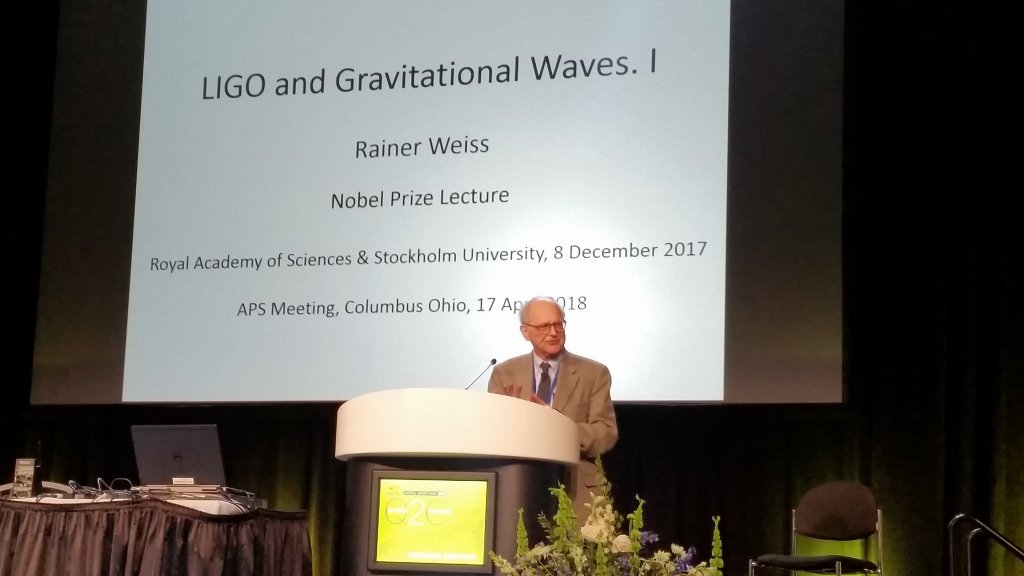
Nobel Laureate Rainer Weiss speaking during the Nobel Prize Lecture
May 8 – 9, 2017 in Peter O’Donnell Jr. Building (ACES) Room POB 2.402
Attending conference (not presenting)
Event information:
This year, the theme of this mini-conference will be “The Lepton and Baryon Symmetry”. The motivation for this focus are connections and experimental explorations by researchers at the University of Texas and the Osaka University, where we conduct experiments on neutrino oscillations and searches for neutrinoless double-beta decays and muon-to-electron conversion.
During the symposium we will cover the most recent results and both experimental and theoretical directions to explore global symmetries of the Standard Model: the lepton flavor, and baryon conservation. We will bring together a small group of experts in theory and experiment who will share their views on ongoing world results and trends.
New Orleans Ernest N. Morial Convention Center, New Orleans, Louisiana
March 13, 2017 @ 8:48am in Room 299
Measurement of two-photon absorption cross section of silicon nanocrystals in colloidal suspension
Brandon J. Furey1, Michael C. Downer1, Dorothy A. Silbaugh1, Adrien C. Guillaussier1, Yixuan Yu2, Brian A. Korgel1
1University of Texas at Austin, 2Lawrence Livermore National Laboratory
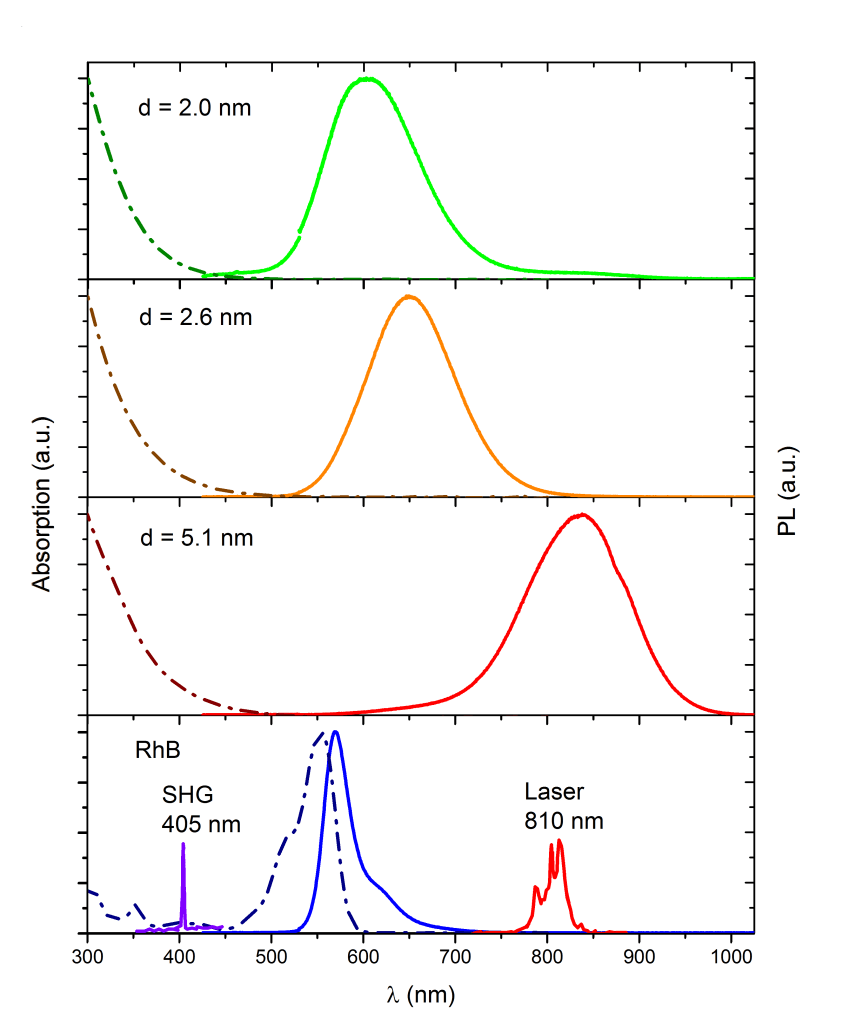
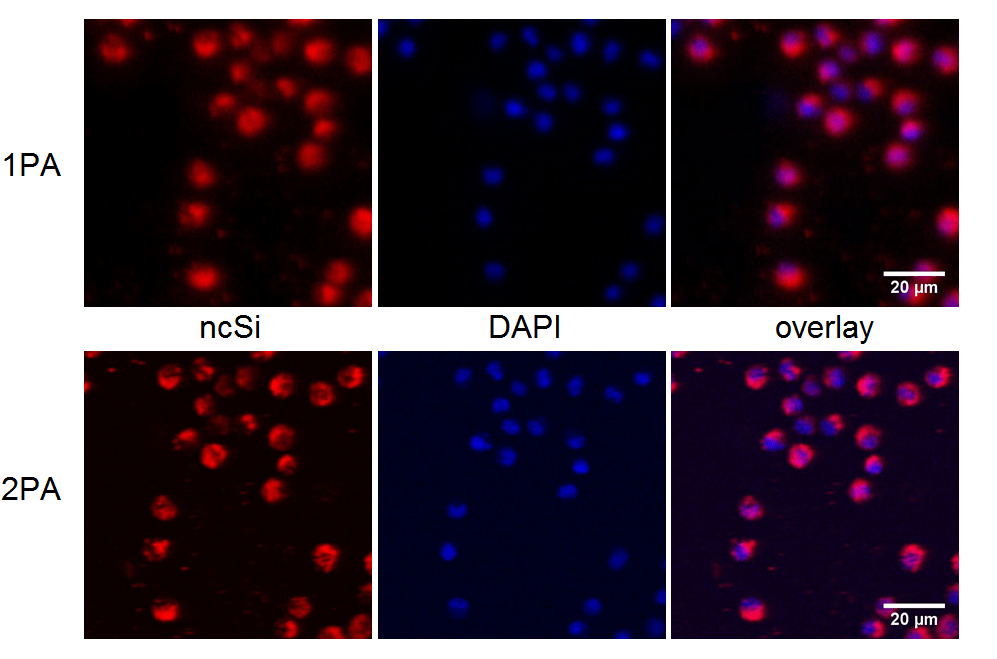
Two-photon absorption (2PA) in liquid suspensions of ligand-passivated silicon nanocrystals (ncSi) is difficult to measure directly because of their low absorption cross section and competing nonlinear optical processes at high light intensity. Here we overcome these difficulties by measuring background-free, 2PA-induced photoluminescence (PL) as a function of the intensity of ultrashort 800 nm excitation pulses and then calibrating the response by measuring PL induced by one-photon absorption. Using this indirect method, 2PA cross sections of ncSi with diameters 2.2 and 2.7 nm suspended in toluene were 0.505 ± 0.005 and 2.24 ± 0.02 E-50 cm4 s / photon, respectively. This procedure was validated using rhodamine B in ethanol for which the 2PA cross section was 21.8 ± 0.1 E-50 cm4 s / photon, which agrees with direct measurements.\footnote{A. Nag, D. Goswami, J. Photochem. and Photobio. A: Chem. 206 (2-3), 188 (2009)} The size dependence of 2PA cross sections for ncSi and comparisons with other reference samples will be discussed. Water-dispersible ncSi may be suitable for bio-imaging.\footnote{C.M. Hessel, J. Wei, B. Korgel et al., Chem. Mater. 24 (2), 393 (2012)} This application is demonstrated using 2PA confocal microscopy of ncSi-incubated mouse tissue.
PL and absorbance spectra of ncSi1PA and 2PA excited PL of ncSiConfocal microscopy imaging of mouse cells with ncSiTEM images of ncSi
Session A36: Quantum Dots, Quantum Wells, and Metamaterials: Optical Characterization and Applications 8:00 AM–11:00 AM, Monday, March 13, 2017 Room: 299
Sponsoring Units: DCMP DMP Chair: Brennan Pursley, Naval Research Laboratory
Abstract ID: BAPS.2017.MAR.A36.5 Abstract: A36.00005: Measurement of two-photon absorption cross section of silicon nanocrystals in colloidal suspension* 8:48 AM–9:00 AM
March 14, 2016 @ 11:27am in Hilton Baltimore Room: Holiday Ballroom 5
Two-photon absorption in 3-100nm diameter Silicon nanocrystals in solution
Brandon J. Furey1, Michael C. Downer1, Y. Yu1, Brian A. Korgel1
1University of Texas at Austin
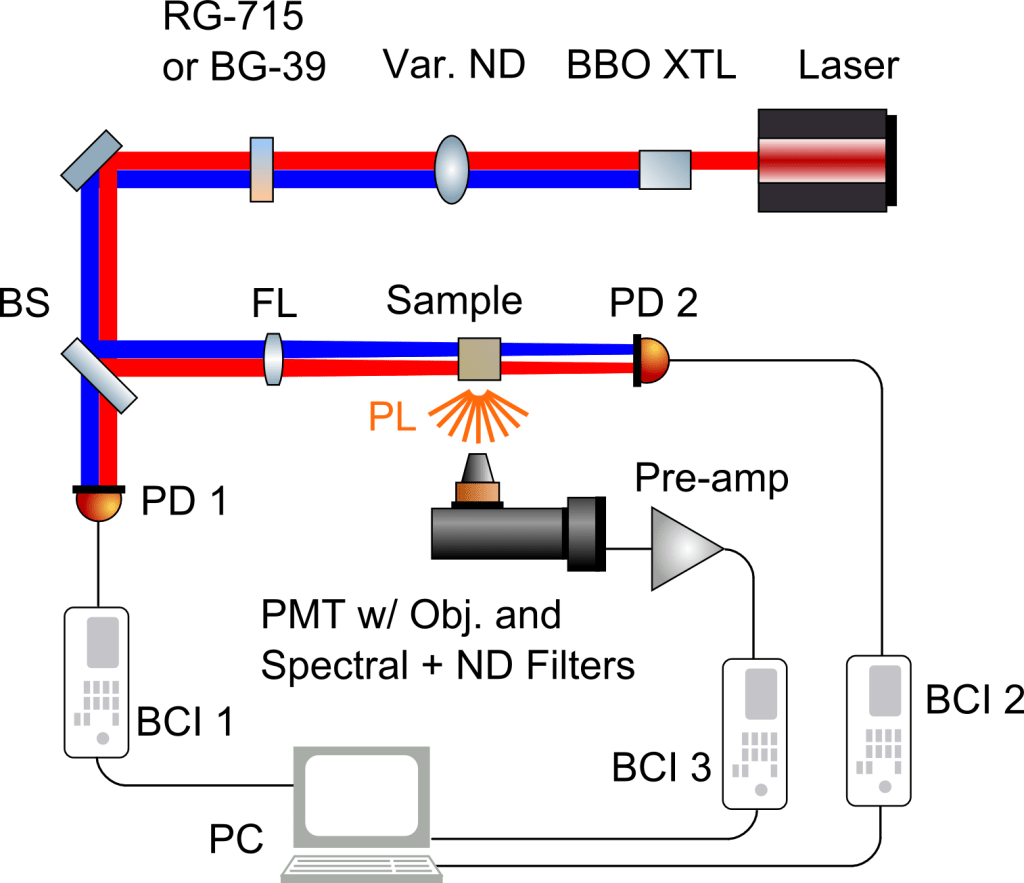
Silicon nanocrystals (nc-Si) exhibit efficient photoluminescence (PL) that has applications in non-toxic bio-imaging. Two-photon absorption (TPA) is an important process for exciting PL in the tissue transparency spectral window, but absolute TPA coefficients have not been measured as a continuous function of nc size or excitation wavelength. Previous TPA studies have focused on nc-Si embedded in an oxide matrix or on porous Si surfaces at selected discrete wavelengths [1]. However, recently free standing, ligand-stabilized nc-Si with diameters ranging from 3 to 100 nm that are soluble in liquids, including water, and suitable for bio-imaging have become available [3]. We will present calibrated TPA spectra for free standing nc-Si over a wide range of nc diameters, based on measurements with tunable femtosecond laser pulses. We will compare indirect TPA measurements based on collection and detection of PL with direct TPA measurements based on attenuation of the incident beam. [1] P. Zhang, Z. Zhang, K. Chen et al., Nanoscale Res. Lett. 9 (28), 1 (2014) [2] C.M. Hessel, J. Wei, B. Korgel et al., Chem. Mater. 24 (2), 393 (2012).
Two-photon induced photoluminescence setup for measuring 2PA in Si nanocrystals
Session B54: Optical Properties of Semiconductor Nanostructures II 11:15 AM–2:15 PM, Monday, March 14, 2016 Hilton Baltimore Room: Holiday Ballroom 5
Sponsoring Units: FIAP DMP Chair: Alexander Efros, Naval Research Lab
Abstract ID: BAPS.2016.MAR.B54.2 Abstract: B54.00002 : Two-photon absorption in 3-100nm diameter Silicon nanocrystals in solution 11:27 AM–11:39 AM
Joe C. Thompson Conference Center, University of Texas at Austin, Austin, Texas
June 28 – July 3, 2015
Hosting conference (not presenting)
Event information:
Prof. Mike Downer will be chairing the 11th international conference on Optics of Surfaces and Interfaces (OSI-11). OSI highlights new developments in optical techniques for probing interfaces and nanostructures, and new advances in basic and applied optical surface science.
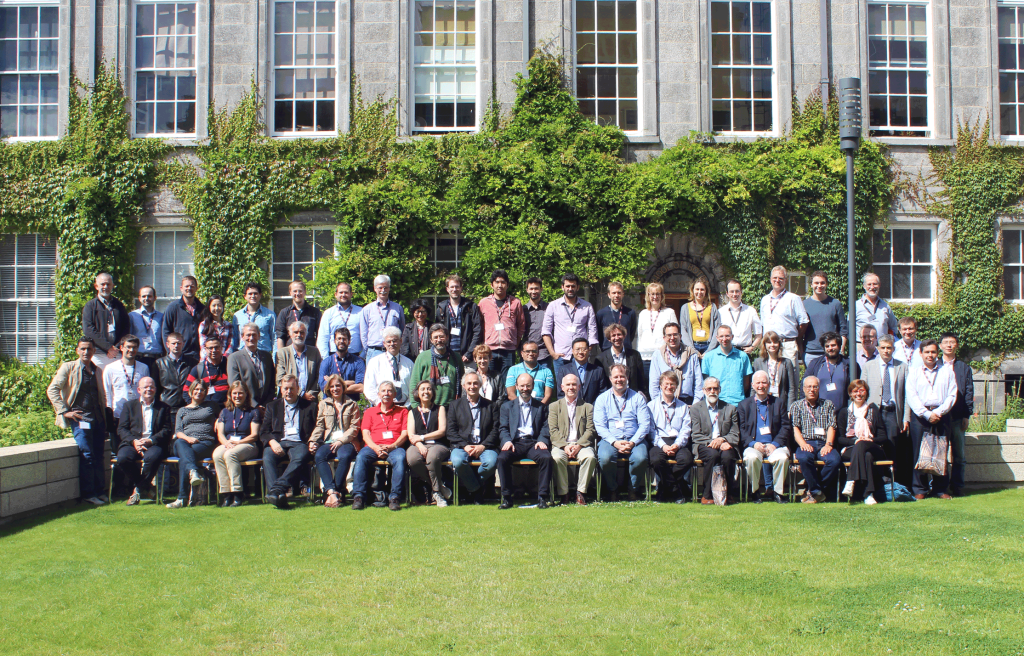
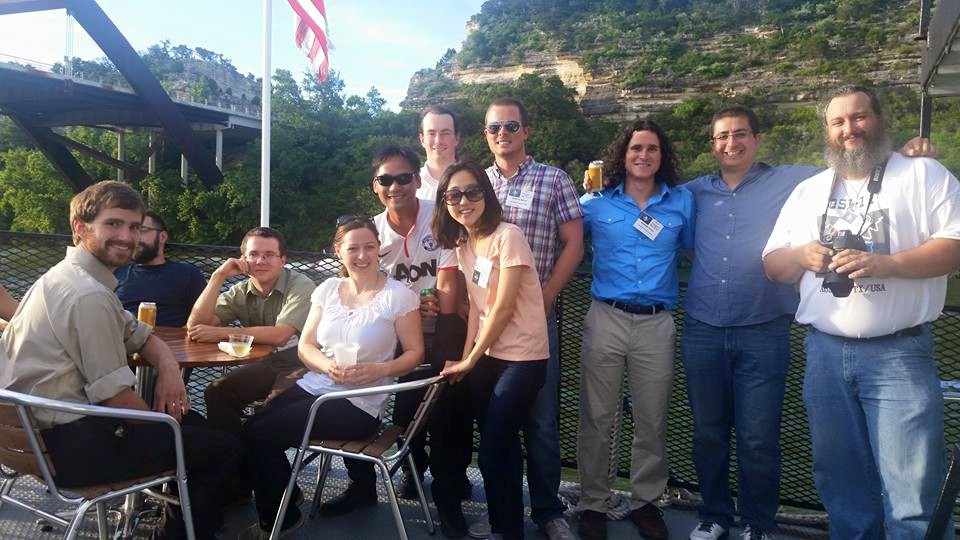
OSI 11 conference attendees on riverboat cruise on Lake Austin
December 5, 2014 @ 4:00pm in Robert Lee Moore* Hall Room 5.104 (*now Physics, Math, and Astronomy Building)
Nonlinear Optical Spectroscopy of Silicon Nanocrystals
Brandon J. Furey1
1University of Texas at Austin
My current project is second-harmonic generation (SHG) and two-photon absorption (TPA) spectroscopy of ligand-stabilized silicon nanocrystals (ncSi), a new form of free-standing mono-disperse ncSi developed recently in Professor Brian Korgel’s chemical engineering group that can be dispersed in various liquid solvents, including water. Silicon nanocrystals embedded in solid oxides have been of interest to silicon photonics for many years because, unlike other forms of silicon, they luminesce efficiently. However, the microscopic mechanisms of luminescence remain controversial, in part because the difficult-to-characterize nano-interface of the ncSi plays an important role. A previous Downer student (Junwei Wei, PhD 2012) carried out a SHG study of oxide-embedded ncSi that revealed nano-interface-specific spectroscopic signatures that contributed to better understanding of this elusive nano-interface.
My proposed work aims in part to provide a comparative SHG study of ligand-stabilized free-standing ncSi. Raman spectroscopy by Korgel’s group and ours has already shown that absence of interface strain in free-standing ncSi causes important changes in their vibrational spectra, compared to their highly-strained, oxide-embedded counterparts. My proposed SHG study will probe corresponding differences in the electronic structure of the nano-interfaces.
A second scientific interest of free-standing ncSi is bio-imaging. Since ligand-stabilized ncSi are non-toxic, they can be attached to living organelles, which can be imaged via their photoluminescence. Unfortunately, the upper luminescing states must usually be excited by UV light, which damages cells and is not easily transmitted through tissue. For in-situ applications, I therefore propose to excite these states via TPA using near-infrared femtosecond light pulses, which are non-ionizing and much more readily transmitted through biological samples.
I will present details of the experimental procedure and preliminary results.
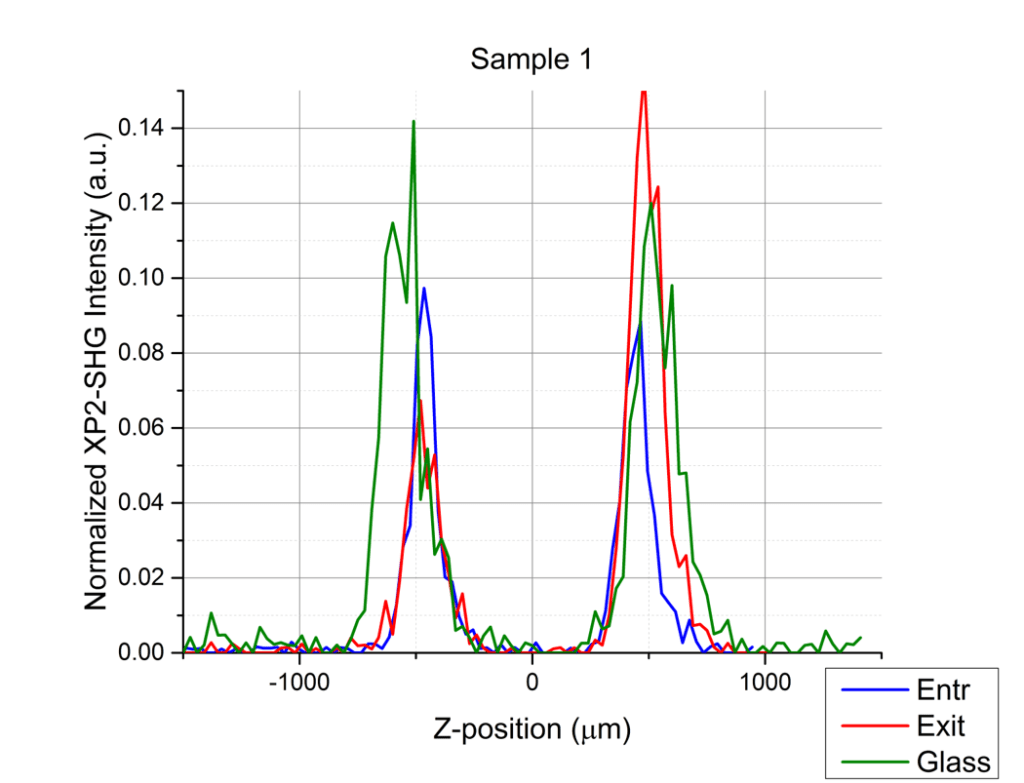
Cross-polarized 2-beam second-harmonic generation Z-scan of silicon nanocrystals on glass slide
Development of a Time-of-Flight Mass Spectrometer Using Radial Extraction from a Linear Quadrupole Ion Trap
Brandon J. Furey1, Jessie Petricka1
1Gustavus Adolphus College
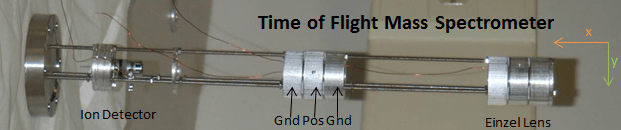
The primary objectives were the development of a linear quadrupole ion trap (LQT) and a time-of-flight (TOF) mass spectrometer. The LQT functions by forcing ions into a stable trajectory controlled by radio-frequency electric fields. A general overview of the development and operation of the LQT will be discussed. The ions that are currently being studied are produced by laser ablation which produces a plume of multiple different molecules. In order to identify trapped ions, a TOF mass spectrometer was developed and assembled. The ions are radially extracted from the LQT with a particular energy and accelerated through the drift tube. By measuring the TOF, the mass of the ions can be determined. Further discussion of the TOF device and other projects will follow.
Radial extraction TOF mass spectrometer with Einzel lenses (ion optics) for LQT
Development of a Time-of-Flight Mass Spectrometer Using Radial Extraction from a Linear Quadrupole Ion Trap
Brandon J. Furey1, Jessie Petricka1
1Gustavus Adolphus College
The research goals for the Atomic, Molecular, and Optical Physics Lab Group for 2011-2012 were twofold; to produce and trap molecular ions using laser ablation to load a linear quadrupole ion trap (LQT), and to develop a time-of-flight mass spectrometer to identify the trapped ions. Such cold molecule samples have applications in mass spectrometry, measurement of physical constants, and quantum state manipulation. Dan McDougal designed and built the LQT. This year, consideration of the necessary conditions to trap ions in stable trajectories resulted in successfully trapped ions. In addition, a time-of-flight mass spectrometer was designed and the preliminary stages were built.
Brandon Furey with the linear quadrupole ion trap in Prof. Jessie Petricka’s AMO Lab









































 Brandon J. Furey